Connecting the Dots

A creative project by Kenyon students that bridges art, neuroscience and a connection to place is coming to The Annex in Mount Vernon.

Date

Walk inside The Annex in Mount Vernon — an extension of Kenyon’s accredited teaching museum, The Gund — and color explodes off the walls. The bulletin boards are bursting with student art, from a watercolor of the South Main Plaza Dog Fountain to a print of bright red strawberries. 

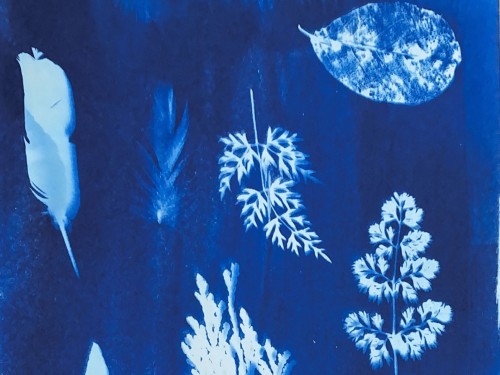
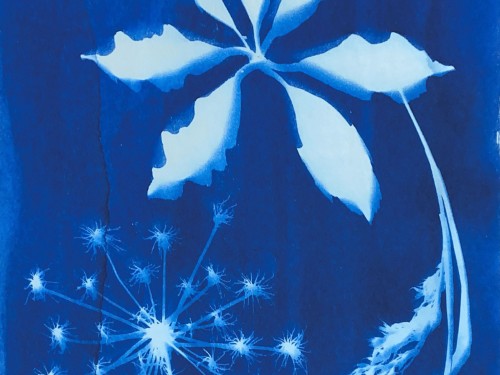
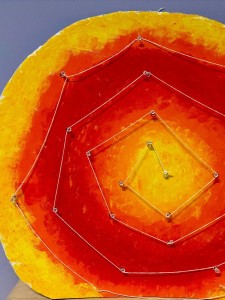
Joining these starting Jan. 12 will be a creative endeavor with a scientific twist. It’s called the Connect(h)ome Project, and it is an interdisciplinary effort by Kenyon neuroscience students. 

Students in Assistant Professor of Neuroscience Lauren Rudolph’s “Introduction to Neuroscience” class spend time at a place of their choosing in Knox County and then create a piece of art based on a connection they make between the location and a topic they have studied in neuroscience.

The project was inspired by the massive initiative known as the Connectome, which, Rudolph said, created a cartography of connections in the human brain, mapping how different neurons and regions talk to each other. Rudolph added the “(h)” to show how the project’s goal is to connect students more deeply to a sense of place, grounding them in their Knox County home. 
The Connect(h)ome project spans a semester, starting with a class visit to The Gund. Students work in pairs and choose from a list of Knox County locations, including Ariel-Foundation Park and the dog fountain in Mount Vernon. Over the course of the semester, they develop a piece of art and a written artist’s statement that demonstrate a connection between their location and a topic in neuroscience. Students visit The Annex as a class, and are encouraged to return throughout the process to brainstorm, practice techniques and use materials. 

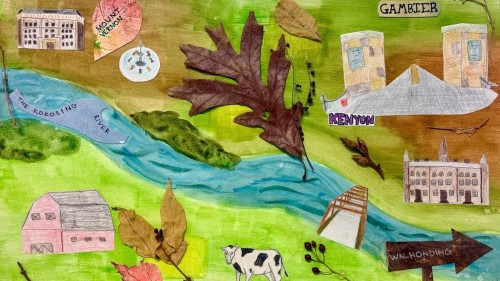
Mira Allen ’26 and Sadie Kruger ’27 were students in the project’s inaugural group three years ago. Their work focused on the way the Kokosing Gap Trail bridge over the Kokosing River near campus connects communities, similar to how cerebrospinal fluid connects the brain and spinal cord, “delivering nutrients and removing waste,” as Allen explained. The pair gathered leaves from the Kokosing riverbank and visited The Annex several times to collage and watercolor a map of locations the Kokosing River connects. 

“At first, I felt out of my depth trying to connect the bridge with the function of the brain,” Allen said. “(But soon) … I began to understand the way the cerebrospinal fluid maintains our nervous system and how it mirrors the function of the river, the backbone supporting and connecting its surroundings.” 

Rudolph says the project has taught her that “physical spaces in Gambier and Mount Vernon can transcend time and build relationships.” One student, for example, connected the carvings of the Upside-Down Tree on campus to the overlapping nature of memory because her parents were Kenyon alumni and loved the tree during their time here. 

The final results that will be on display at The Annex are bright and colorful — and so different from what the students are often asked to do in a neuroscience class. Wynne Morgan, The Gund’s coordinator of engagement and public programs, said she’s seen students transformed when they walk into The Annex to work on the project.

 “I know Kenyon students to be so academic and so driven — giving them something a little more nebulous … (and) the world opens up in this really big way.”