Professor David Rowe’s international relations course is designed to examine longstanding systems and processes, but as war rages in Iran and broader geopolitical changes remake the world order, he finds himself regularly addressing current events in class.
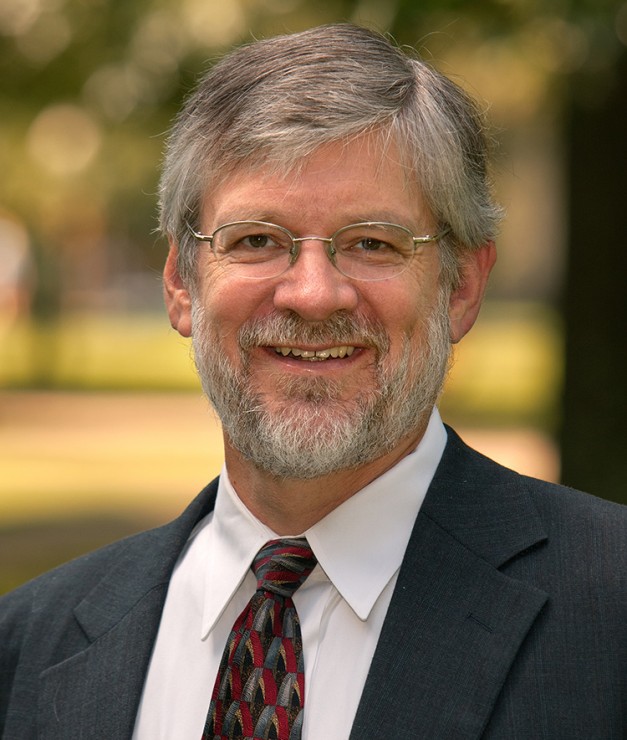
“This is something that students really don’t quite know how to think about,” said Rowe, the Harry M. Clor Professor of Political Science and this year’s Baccalaureate Day speaker at Kenyon. “There’s a desire to know essentially what’s going on.”
Rowe — who has spent time in Brussels, Belgium, as a NATO Fulbright Security Scholar — and his colleagues in the Department of Political Science are uniquely positioned to help students try to make sense of what’s happening.
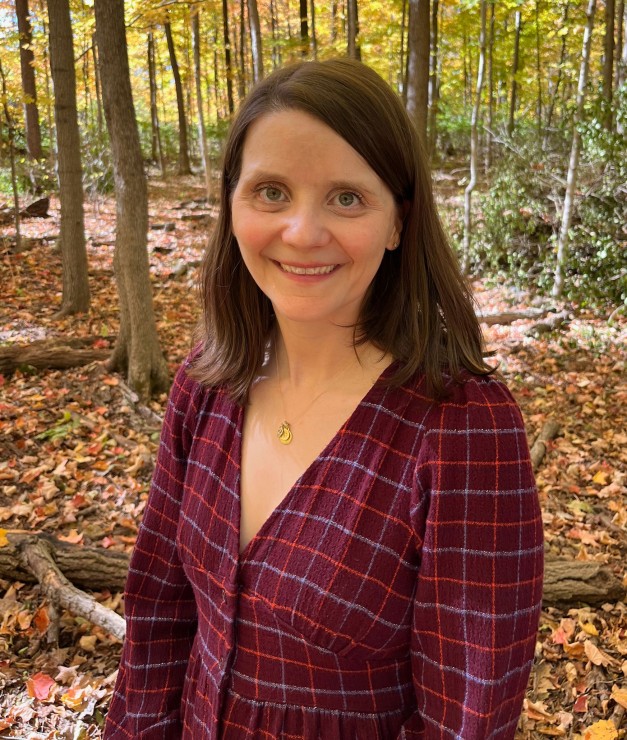
Associate Professor Jacqueline McAllister, who is teaching “Politics of Criminal International Law” this semester, worked in the U.S. Department of State under both the Biden and second Trump administrations. And Professor Pamela Camerra-Rowe, who teaches “Modern Democracy” and “Democracy in Crisis” and who will be exploring the impact of the changes in the international system in a new course on the European Union next fall, spent last semester teaching EU politics at the Danish Institute for Study Abroad in Copenhagen.
These are the kind of experiences that help faculty offer insights or remake their classes on the fly when current events upend longstanding international organizations and processes.
And that’s exactly what they say is happening now: Alliances like NATO are weakening. Organizations that have been the bedrock of the modern world order — like the United Nations, International Monetary Fund and International Criminal Court — are floundering.
“The United States and others have worked for over 80 years to build up international law and organizations, and the past year has seen a full on assault of it, and it’s really unprecedented,” McAllister said. “I’ve been writing stuff on my own for my courses about these developments because scholars haven’t yet had time to publish on these issues. It’s so new, and it’s fundamentally changing how we approach things.”
McAllister has gotten a close up look at how these processes work, starting with her time as an International Affairs Fellow with the Council on Foreign Relations in 2023.
“The whole goal of that fellowship is to take academics and put them in government or an international organization. I worked in the U.S. State Department’s Office of Global Criminal Justice for a year.”
McAllister stayed on when the fellowship was over as a senior advisor, and said the experiences gave her a much better sense of how government actually works in practice.
“I know how the national security process operates because I got to be a part of some of those meetings — at least in the State Department,” she said. “That experience was eye-opening in so many ways.”
She’ll rely on that experience to redesign her fall course on international organizations, given how much has changed in the past year.
“It will be an interesting opportunity to explore how things worked and how they fell apart,” she said.
Rowe, whose international relations classes cover the origins and structure of the liberal world order created after World War II, had a Fulbright fellowship in Brussels, sponsored by NATO’s Division of Public Diplomacy, in 2022-23.
“I spent my time talking to all kinds of people about what they saw the future of the transatlantic alliances being, what were some of the major challenges that it was going to face,” he said. “While I was there, I was listening very carefully, trying to think through what this implied for the future. I also did a lot of work with a think tank in Brussels on trying to think through how the war in Ukraine was going to end.”
Since then, he’s stayed involved by attending the NATO Public Forum, part of the Alliance’s annual summit — held last year in The Hague — which involves access to heads of state, ministers of defense and foreign affairs, and other policymakers.
“This was very close contact with the people from across the transatlantic community — Europe, the United States, Canada — about what they saw,” Rowe said. “These discussions have been front and center for me for the last three or last four years.”
That doesn’t mean he or his fellow faculty members have all the answers to student questions, of course.
“Students want us to tell them: ‘This is how it ends, and this is why everything is going to be OK,’” Rowe said. “One of the things I think — and I literally said this yesterday — is if anybody tells you they know how this is going to end, they don’t know what they’re talking about.”
But he does have more hopeful questions for them to consider — in class this year and in the future.
“These periods can also be periods of high opportunity because a lot of the world structures — the good ones and the bad ones — are all in flux. And it creates opportunities to restructure the world in ways that make it better,” he said.
McAllister called it a moment rife with possibilities for “creative destruction.”
“One thing I am trying to stress with my students is that it’s an unsettling time, but it’s also a time of immense opportunity,” she said. “Now, more than ever, you exercising agency and stepping up really matters.”