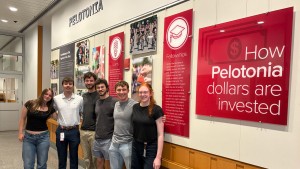
This year's cohort of Kenyon students conducting cancer research with The Ohio State University faculty as part of a partnership with Pelotonia.
Owen Gingras ’28 went into his summer research project knowing the stakes were high: He would be studying a fatal, fast-moving pediatric brain cancer with no cure and a two-year survival rate of only 10 percent.
“It’s a death sentence,” he said.
But he entered it with hope, too, understanding that his work at Nationwide Children’s Hospital in Columbus under the guidance of Rachid Drissi — principal investigator at the Center for Childhood Cancer Research and an associate professor at The Ohio State University — could lead to life-saving advances.
“Knowing that the stuff that I do in my lab could be used to truly help someone — maybe save a child with brain cancer — is something that’s really cool to think about,” said Gingras, who wants to be a pediatrician one day. He is one of six Kenyon students spending their summers in Columbus collaborating with world-class researchers from Ohio State. The internships are part of a special partnership with Pelotonia, a nonprofit founded in 2008 that has raised more than $330 million for cancer research at the university.
Each year, Kenyon students are selected to work alongside Ohio State faculty members and graduate and postdoctoral students for 10 weeks. Since the program began in 2012, 90 students — who receive a stipend and housing — have taken part.
Pelotonia is well known in central Ohio for its annual cycling event to raise money for cancer research. For more than a decade, the longest route during Ride Weekend — which takes place Aug. 1-2 this year — has culminated at Kenyon.
Some of the money raised directly supports these student researchers, whose experiences have reinforced not just the scientific importance of the work, but also the value of their liberal arts education as they explore different health-related career paths.
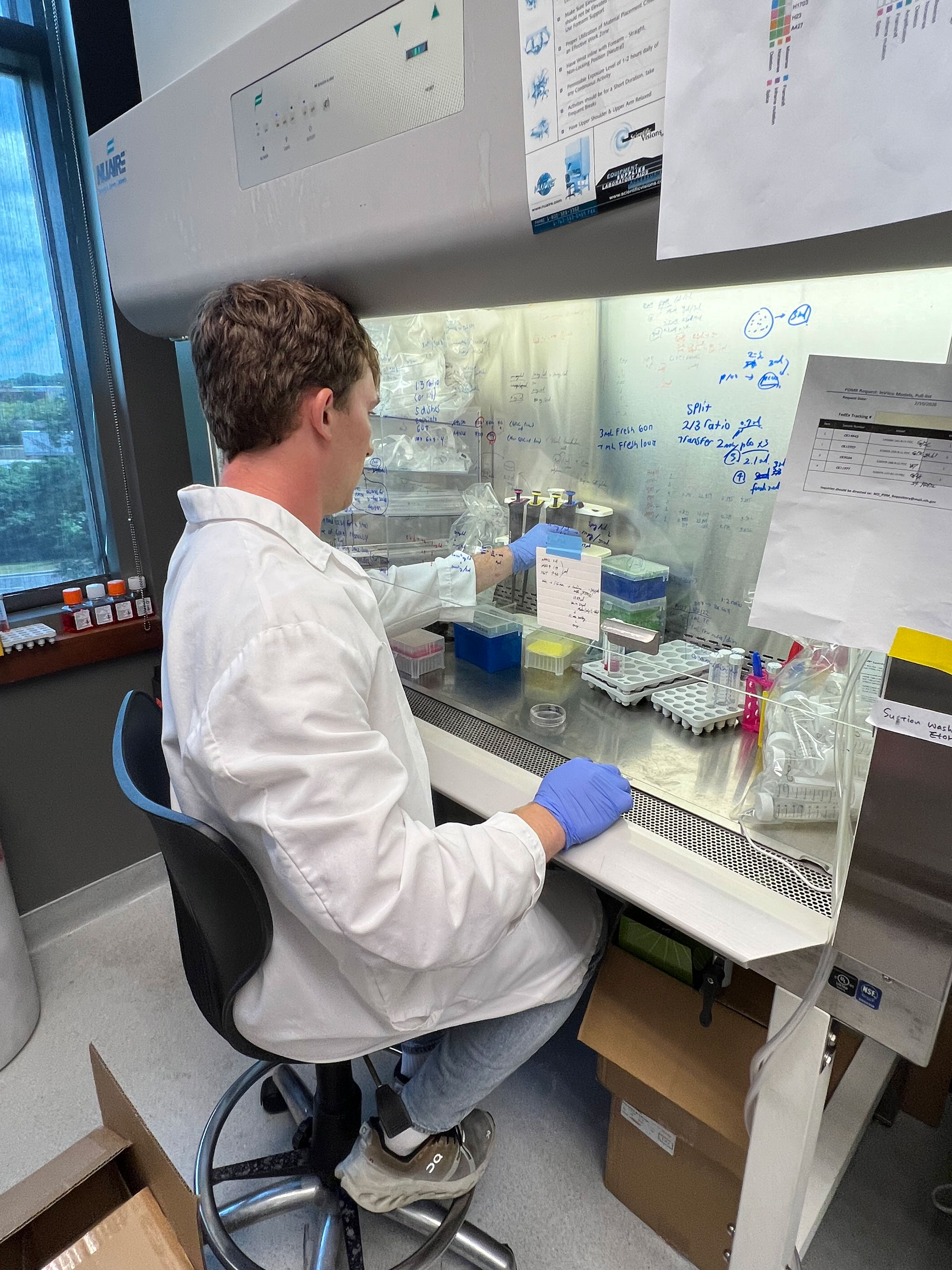
Jack Levitt ’28 is spending his summer evaluating what causes resistance to a new lung cancer drug in certain patients. Being at Ohio State — whose comprehensive cancer center known as The James ranks among the best in the country — offers him a look into the future as he considers pursuing graduate studies.
“It’s been cool to be at a highly funded research university that has a big cancer center to get a better sense of what it would be like to go to grad school,” said Levitt, who is from Seattle. “Talking with the grad students, talking with the postdocs, seeing what their life’s like — that’s been extremely helpful for me.”
As for Gingras — a student from Spokane, Washington, who wants to go to medical school — he’s excited to be part of important research that could have real impact.
“A lot of the work that’s done in the lab will go directly to clinical trials at Nationwide if they get approved,” he said.
The students live in an Ohio State residence hall on campus, near Columbus’ popular Short North neighborhood, and come together regularly for meetings and panel discussions featuring graduate students, cancer survivors and others. All of them said they’ve felt prepared for the experience — in and out of the lab.
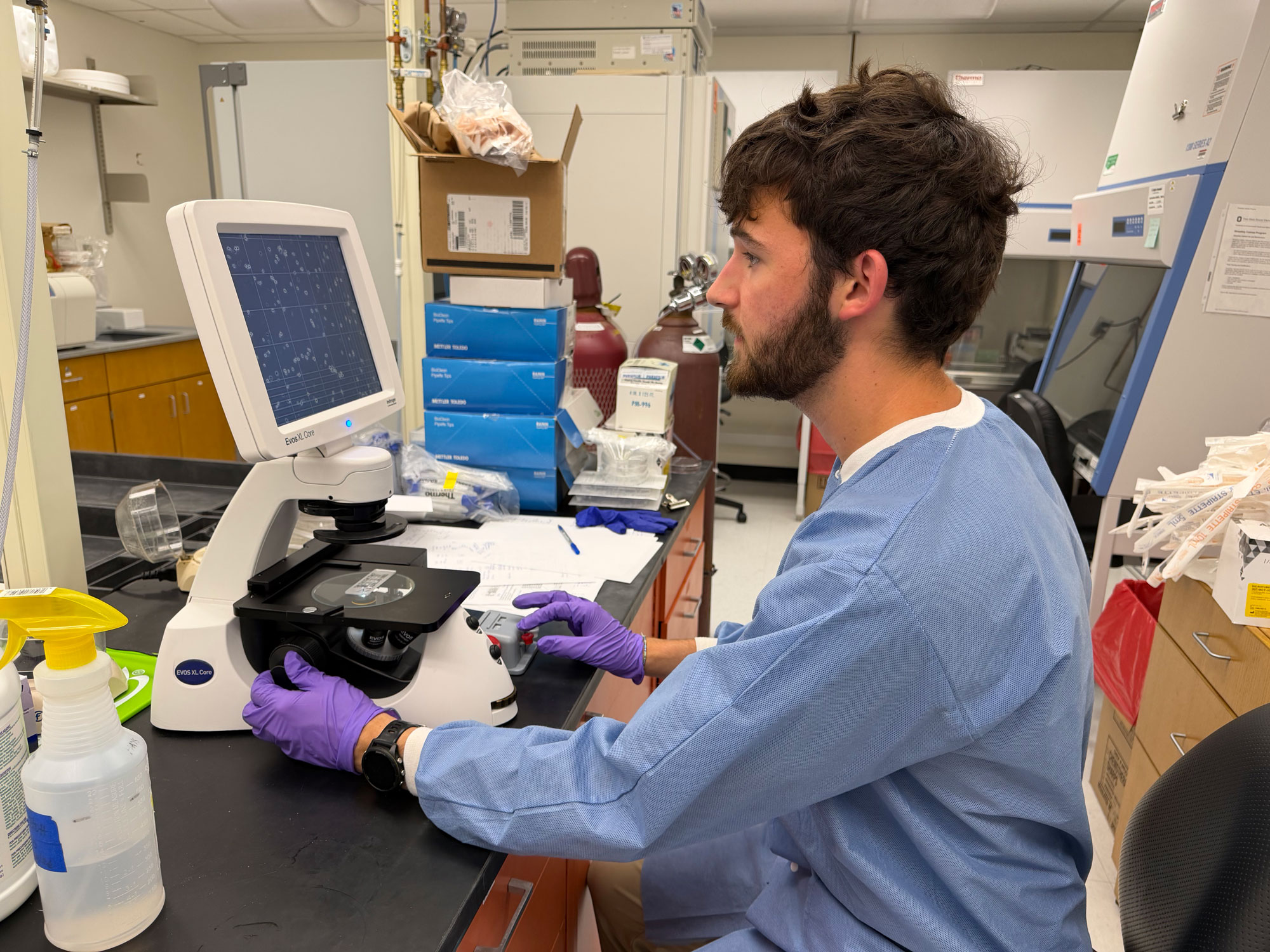
For Dylan Ryznar ’28, of Portland, Oregon, that meant working one-on-one with a distinguished faculty mentor and building on his previous lab work at Kenyon. His project — which he was able to design himself — involves the epigenetics of skin cancer, or how chemical changes around DNA can affect gene expression and potentially be targeted to prevent or slow cancer growth.
“I have been learning a lot of new techniques as my experiment has progressed,” said Ryznar, who eventually wants to enter a doctoral or M.D.-Ph.D. program.
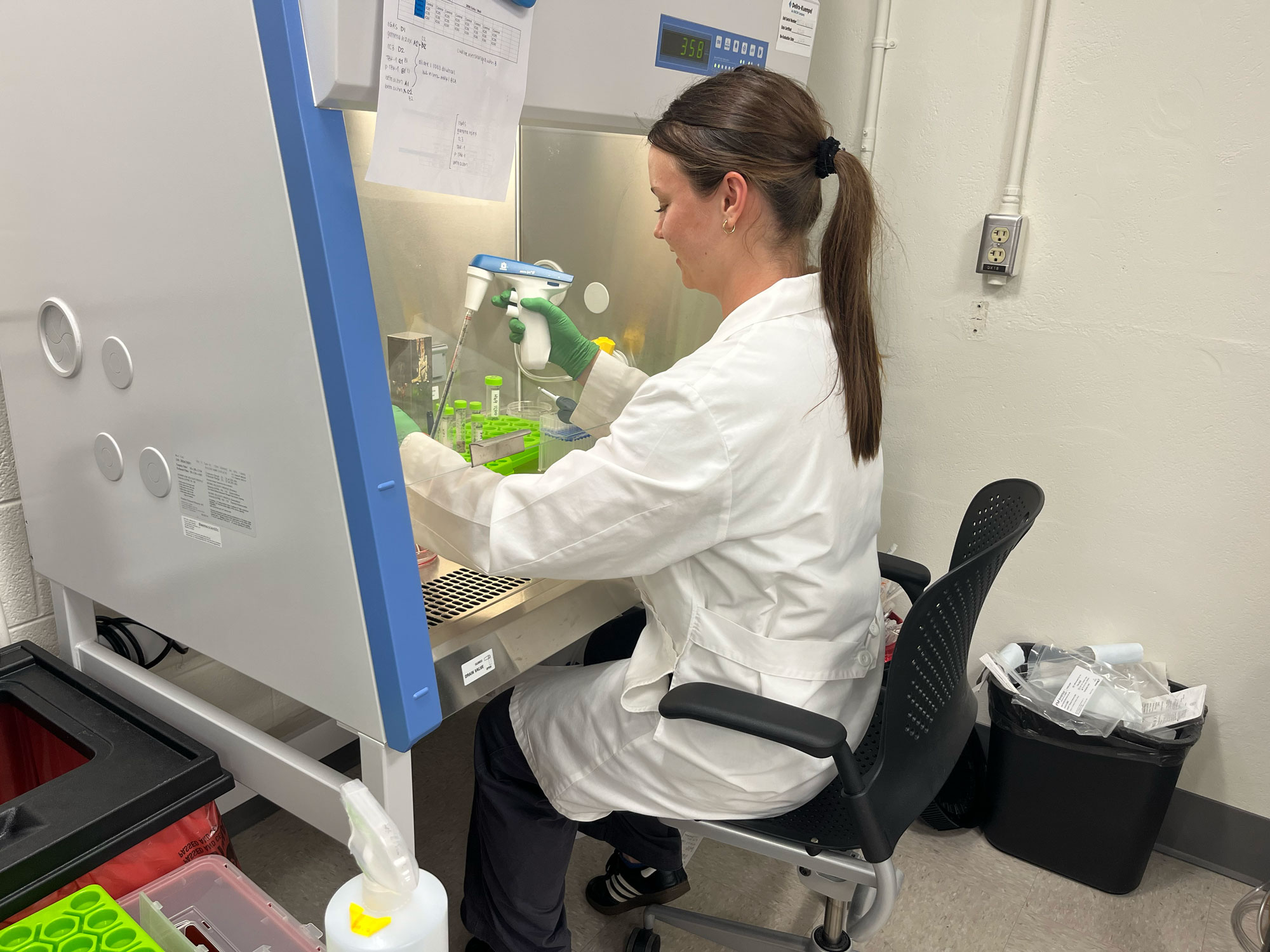
Sadie Olson ’27, of Ann Arbor, Michigan, is examining how radiation and cancer drugs interact and how those combinations affect the immune system’s ability to slow tumor growth. She said her experience has confirmed just how well-equipped Kenyon students are for this consequential work in terms of doing the research and communicating their findings.
“One thing that we’ve all noticed is the value of our Kenyon classes and feeling really prepared to take on something like this, especially at a larger school where we’re embedded in a program of … other OSU students who are doing similar projects,” she said.
Julia McGovern ’27 said her work with Fred Tabung — associate professor at The Ohio State University College of Medicine and Comprehensive Cancer Center and a member of the National Cancer Advisory Board — has shown her why strong communication skills are essential for scientists. She noted that when Tabung presented his research to the President’s Cancer Panel in June, communicating complex scientific findings clearly and effectively to policymakers was critical.
In Tabung’s lab, McGovern is contributing to a pilot study that aims to develop a tool to measure the level of food processing and characterize the nutritional and metabolic differences between less processed and highly processed foods.
Pedro Rodrigues de Mello Araujo ’27, of Sao Paulo, said he is learning so much from his summer experience investigating whether a weight loss medication used to treat obesity could also impact pancreatic cancer by reducing obesity-related risk. But he was quick to note that Kenyon — where he has been involved in biology research in the past — did a great job preparing him, both in terms of technical skills and in having patience and perseverance.
“Kenyon does a very good job teaching all of those things,” he said.
Ground-breaking Research
Here are the specific projects that Kenyon students are working on as part of a partnership with The Ohio State University and Pelotonia.
- Owen Gingras ’28, “Culture Conditions Regulate Phenotypic and Cell State Plasticity of Patient-derived Diffuse Intrinsic Pontine Glioma Cells”
Mentor: Rachid Drissi, principal investigator at the Center for Childhood Cancer Research at Nationwide Children's Hospital, director of the Translational Research and Correlative Studies Laboratory for the Collaborative Network for Neuro-Oncology Clinical Trials (CONNECT) and associate professor at The Ohio State University - Jack Levitt ’28, “Evaluating SMARCA4's role in resistance to KRAS inhibition in Non-Small Cell Lung Cancer”
Mentor: Dongsung (DS) Kim, assistant professor in the Department of Veterinary Biosciences at The Ohio State University - Julia McGovern ’27, “Understanding How Food Processing Influences Nutrition and Health”
Mentor: Fred Tabung, associate professor at The Ohio State University College of Medicine and Comprehensive Cancer Center - Sadie Olson ’27, “Evaluating Immune Modulation in Radiation Therapy Combination Settings for Treatment of Small-Cell Lung Cancer”
Mentor: Dr. Yoko Nishiga, associate radiobiologist at the James Comprehensive Cancer Center at The Ohio State University - Pedro Rodrigues de Mello Araujo ’27, “A Weight Loss Medication Slows Obesity-Associated Pancreatic Cancer Progression in Mice”
Mentor: Zobeida Cruz-Monserrate, Endowed Professor in Gastroenterology, Hepatology and Nutrition at The Ohio State University Wexner Medical Center, the James Comprehensive Cancer Center - Dylan Ryznar ’28, “Engineering a Bacterial Histone Deacetylase to Treat Skin Cancer”
Mentor: Masaoki Kawasumi, associate professor of dermatology at The Ohio State University