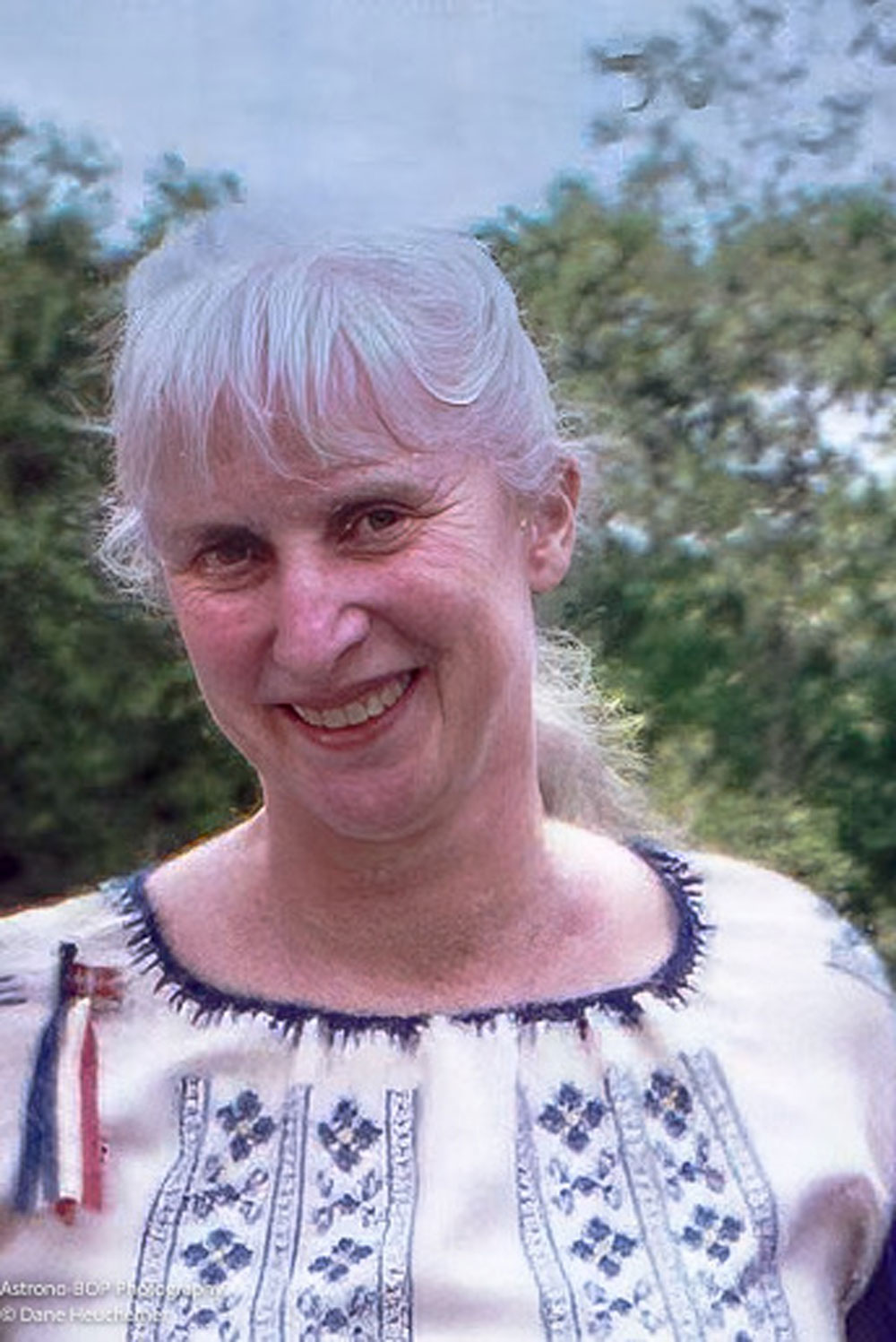
Camilla Cai H’05, a professor emerita of music known for her work studying women composers and for her empathy in and out of the classroom, died June 3 at the age of 85. She spent 19 years at the College, joining Kenyon in 1986 and retiring in 2005 as the James D. and Cornelia W. Ireland Professor of Music.
Born on Aug. 15, 1940, to Einar Haugen and Eva Lund Haugen, Cai grew up in Madison, Wisconsin, and became a renowned musicologist with an expertise in piano and 19th century music, especially that of Germany and Scandinavia.
Her scholarly work at first concentrated on Johannes Brahms, then expanded to the music and lives of Fanny Mendelssohn Hensel, Clara Wieck Schumann and other women. She also produced innovative research on Scandinavian immigrants and their musical contributions to the New World.
“She brought a lot of distinction to the College. She was known nationally and internationally for her research,” said Ben Locke, who now holds the title James D. and Cornelia W. Ireland Professor of Music.
Cai received a Bachelor of Music in piano performance from Oberlin College in 1962 and a Master of Arts in musicology from Harvard University three years later. She worked a variety of jobs — and attended the famous Woodstock music festival in 1969 — before earning a doctorate in musicology from Boston University in 1986.
While at Kenyon, Cai lived in Gambier and became a foundational member of the current music program. She created the College’s first course dedicated to women in music, which was one of her most popular upper-level offerings.
“She was among the early scholars studying women composers when that scholarly field began to emerge toward the end of the 20th century,” Professor of Music Dane Heuchemer said.
Cai also helped change the culture of the music department, adjusted its requirements to open up new study topics and paths to graduation, and was instrumental in getting Storer Hall ready as the department’s new home in 1999, he said.
She was known for her formality but also for her ability to connect with students, Locke said.
“She had a tender heart, and she could seek out the quiet ones in her class and really draw them out better than anyone,” he said. “She really empathized with them. She instinctively understood them.”
This empathy was one of her finest — and most influential — qualities, according to Heuchemer.
“She found a way to work with kids who needed a coach, needed a cheerleader. She’d deliberately pick these kids,” he said. “It was something to watch. I learned a lot from her ability to do that.”
Deeply connected to her Norwegian heritage, she enjoyed folk dancing and spending time in nature. After leaving Kenyon, Cai retired to Maine, where she had a cabin.
Cai is survived by her husband, Michael Field; her son, Elliot Polak; her stepchildren, Andrea Field and Ethan Contini-Field; seven grandchildren; and many other members of her extended family. As Cai chose to donate her body to science, a memorial service will not happen immediately.