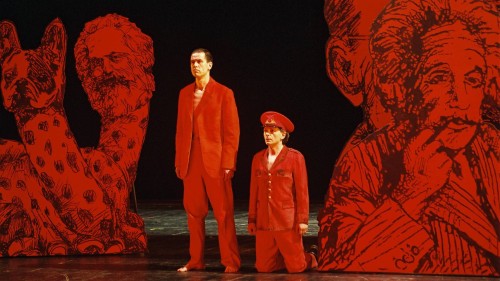
This research presentation combines both a textual analysis and a close listening on Brian Ferneyhough and Charles Bernstein's opera "Shadowtime."
"Shadowtime" is a "thought" opera on the death of the German-Jewish philosopher and literary critic Walter Benjamin in collaboration between the English New Complexity composer Brian Ferneyhough and the American Language Poet Charles Bernstein. Concerning the intertextual references mentioned in this work, she analyzes how Walter Benjamin's life, writings, and other relevant extra musical materials are quoted, adapted, and transformed through Ferneyhough's music and Bernstein's libretto. For a work that deals both music and texts, she will discover a similar compositional approach in New Complexity composers and the Language Poets, namely, the emphasis on complexity, ambivalence, decentered, ambiguous, and excess information on the texts/scores. By focusing on several specific scenes in this opera and discuss how contemporary new music and performance sound poetics deal with the gaps between written texts/scores, performance, and audience's reception/interpretation. To address this problem, Chenxiao will integrate Ferneyhough's writings on music, Bernstein's theoretical frameworks of performance poetry and sound poetics, as well as Benjamin's texts on politics and aesthetics to explore the intertwining intertextuality and historical backgrounds within this work. Throughout the whole piece, she will evaluate in what sense does a "thought opera" mean to both composers/librettists and us as perceivers by comparing it to "traditional" operas in music history, and how "Shadowtime" challenges both the performance of language and music in contemporary contexts.