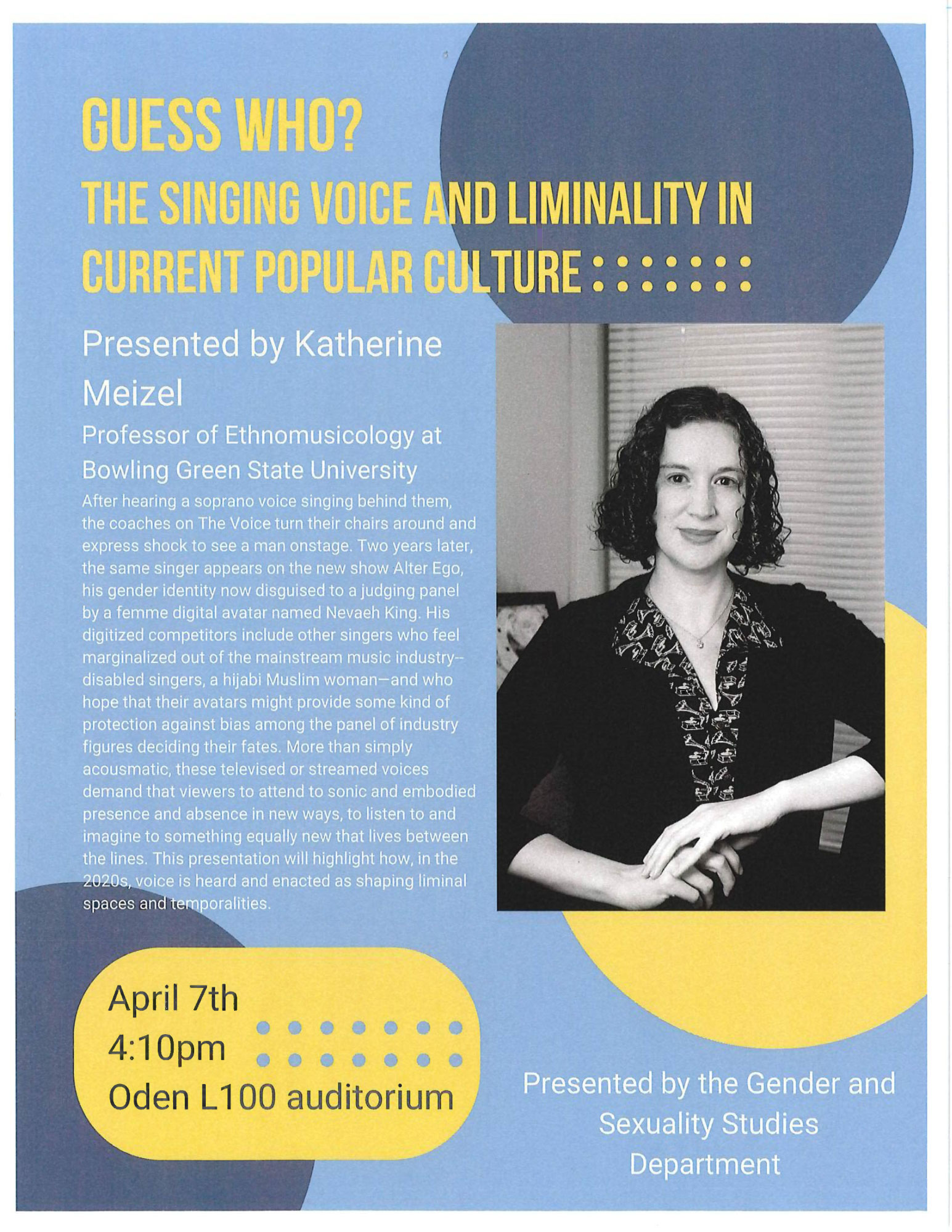
Gender and Sexuality Studies welcomes Katherine Meizel, professor of ethnomusicology at Bowling Green University.
After hearing a soprano voice singing behind them, the coaches on "The Voice" turn their chairs around and express shock to see a man onstage. Two years later, the same singer appears on the new show "Alter Ego," his gender identity now disguised to a judging panel by a femme digital avatar named Nevaeh King. His digitized competitors include other singers who feel marginalized out of the mainstream music industry — disabled singers, a hijabi Muslim woman — and who hope that their avatars might provide some kind of protection against bias among the panel of industry figures deciding their fates. Since 2020, another game-show panel on "The Masked Singer" has perennially tried to identify cartoonishly-masked celebrities after listening to them sing. And on yet another competition show, "I Can See Your Voice," a contestant panel decides who among a group of performers must be the best singer, based only on their lip syncing. More than simply acousmatic, these televised or streamed voices demand that viewers attend to sonic and embodied presence and absence in new ways, to listen to and imagine something equally new that lives between the lines.
This presentation will highlight how, in the 2020s, voice is heard and enacted as shaping liminal spaces and temporalities.